Why Industry Specialisation Can Improve Digital Marketing Performance
Industry specialisation is not a limit on B2B digital marketing — it is one of the most reliable ways to improve message clarity, search demand and lead quality.
Most B2B companies still approach digital marketing as though breadth were the goal — more keywords, more channels, more content, more reach. Yet the businesses that consistently outperform their competitors online tend to do the opposite. They specialise. By concentrating on a defined industry, application or buyer type, they make almost every part of their marketing sharper, more efficient and more persuasive.
Industry specialisation is not a constraint on digital performance. In practice, it is one of the most reliable ways to improve it. When a business commits to being genuinely expert in a defined field, its messaging, content, search visibility and conversion rates all tend to strengthen at once.
Specialisation makes your marketing message clearer
The first and most immediate benefit is clarity. A generalist B2B supplier has to write for many audiences at once, which forces its messaging towards the lowest common denominator. The language becomes broad and inoffensive — and, as a result, forgettable. A specialist can write directly to one type of buyer, using their vocabulary, referencing their standards, and addressing the specific problems they face.
That precision does more than sound impressive. It signals competence. A procurement manager or engineer reading your website can tell within seconds whether you truly understand their world. Specialisation lets you demonstrate that understanding immediately, which shortens the trust-building process that every B2B sale depends on.
Search demand rewards depth, not breadth
Digital marketing performance is heavily influenced by how well your content matches the way buyers search. In B2B, the most valuable searches are rarely broad category terms — they are specific, technical and intent-rich. Generalists struggle to cover these convincingly because they are spread too thin.
A specialist can go deep. It can document applications, edge cases, compliance requirements and technical trade-offs in a way that broad competitors cannot match. This depth aligns directly with high-value queries. There is substantial SEO value in applications, use cases and industries served, and specialists are structurally better placed to capture it.
The same principle applies to complex product ranges. When you specialise, you can properly map the different intents behind each search and structure content to satisfy them. This discipline of search intent mapping for complex B2B product ranges is far easier to execute well when your focus is narrow enough to know your buyers' intentions intimately.
Expertise becomes a compounding asset
Specialisation turns knowledge into a durable marketing advantage. A focused business accumulates deep, specific expertise that generalist competitors cannot easily replicate. Published thoughtfully, that expertise builds authority with both human buyers and the search and AI systems that increasingly mediate discovery.
Crucially, this authority compounds. Each credible, specific piece of content reinforces the association between your brand and its field, and that association becomes harder to challenge over time. Learning how to turn industry expertise into long-term digital authority is one of the highest-return activities available to a specialist B2B business, because the advantage accrues rather than depreciates.
This is very different from the generalist's experience, where content often has to be refreshed constantly just to stay competitive on broad terms. Depth ages better than breadth.
Specialisation improves the quality of demand
Performance is not only about traffic; it is about the commercial value of the enquiries that traffic produces. Specialisation naturally filters demand. When your marketing speaks precisely to one type of buyer, you attract more of those buyers and fewer poor-fit prospects. Sales conversations become easier, qualification is faster, and win rates improve.
There is also a brand dimension. As a specialist becomes known for its field, buyers begin searching for it by name — a strong signal of established preference. This is why brand searches matter more than ever for established B2B companies. A rising volume of branded search usually indicates that your specialisation has translated into genuine market recognition, which is among the most valuable positions a B2B business can hold.
Turning technical expertise into search demand
Many specialist businesses underuse their greatest asset: the technical knowledge held by their engineers and product experts. That knowledge, when translated into clear commercial content, matches exactly the searches serious buyers make while researching a purchase. The challenge is usually organisational rather than technical — capturing what experts know and expressing it in a form that both buyers and search systems can use.
For industrial and technical companies especially, this translation is where specialisation pays off most visibly. Understanding how to turn technical expertise into search demand allows a focused business to convert internal know-how into a steady stream of qualified enquiries, without competing on the generic terms where scale and budget dominate.
The efficiency argument
Specialisation also improves marketing efficiency, which matters as much as effectiveness. A generalist must maintain a sprawling presence across many topics and audiences, spreading budget and attention thin. A specialist can concentrate resources where they compound. Fewer, deeper pages tend to outperform many shallow ones. A focused content calendar is easier to sustain than a broad one. And because the audience is well understood, less budget is wasted on poorly matched reach.
For businesses without large marketing teams, this efficiency is decisive. It allows a modest, consistent effort to produce disproportionate results, because every piece of activity is aimed at the same well-defined objective rather than scattered across competing priorities.
Want to know how your website really stacks up?
Run our free Website & AI Visibility Audit to see how you rank on Google — and in AI search results.
- Free, no-obligation report
- Delivered in minutes
- See exactly what to fix first
Specialisation is a decision, not a limitation
The reluctance many businesses feel about specialising usually comes from a fear of turning work away. But digital performance rarely improves by trying to appeal to everyone. Breadth reads as ordinary; focus reads as authority. Choosing to be the definitive supplier for a defined field does not shrink your opportunity — it concentrates it where you are most likely to win.
The businesses that treat specialisation as a strategic choice, and let it shape their content, search strategy and messaging, consistently find that their digital marketing works harder for less. That is the practical case for specialisation: not a narrower business, but a more effective one.
Where to begin
If your marketing currently spreads across many audiences, the first step is to identify the segment where you are genuinely strongest and most profitable, and to commit your best content and search effort there first. Specialisation does not have to be absolute or immediate. Even a deliberate lean towards your strongest field will begin to sharpen your message, improve your search relevance and lift the quality of the enquiries you attract — and those improvements tend to reinforce one another as your focus deepens.
Why generalist positioning quietly erodes performance
The cost of broad positioning is easy to overlook because it rarely shows up as a single obvious failure. Instead, it appears as a steady drag across every metric. Click-through rates are slightly lower because the messaging is generic. Conversion rates are softer because visitors are not certain they have found a genuine match. Sales cycles run longer because trust has to be built from scratch in every conversation. None of these are dramatic on their own, but together they add up to a marketing function that works hard for modest returns.
Specialisation reverses each of these effects. The clarity that comes from knowing exactly who you serve lifts engagement, improves conversion, and shortens the time it takes a buyer to feel confident. The same budget produces better outcomes, not because you spent more, but because everything you published was aimed with precision. In competitive B2B markets, that difference in aim often separates the businesses that grow from those that merely maintain their position.
How specialisation strengthens the whole funnel
It is a mistake to think of specialisation as purely a top-of-funnel or awareness tactic. Its benefits run through the entire buying journey. At the research stage, specialist content matches the specific questions buyers ask, so you appear when it matters. At the evaluation stage, your depth reassures technically literate decision-makers that you understand their requirements. At the decision stage, your reputation as the field's specialist makes you the safe, defensible choice — the supplier no one gets criticised for selecting.
Because B2B purchases usually involve several stakeholders with different priorities, this consistency across the funnel matters enormously. An engineer, a procurement lead and a managing director will each judge you against different criteria, but a well-specialised business can satisfy all of them precisely because its focus gives it credible depth on every front. A generalist, by contrast, tends to feel adequate to each stakeholder but convincing to none.
Sustaining a specialist advantage
Specialisation is not a one-off repositioning exercise; it is a discipline maintained over time. Markets move, competitors adjust, and the questions buyers ask evolve as their industries change. The specialists who hold their advantage are those who keep listening to their chosen market and keep documenting what they learn, so their content remains the most current and complete source in their field.
This ongoing commitment is what makes a specialist position genuinely defensible. Any competitor can copy a campaign or imitate a message, but few can replicate years of accumulated, well-expressed expertise in a narrow field. That is the deeper reason industry specialisation improves digital marketing performance: it does not just make this quarter's marketing more effective — it builds an advantage that becomes progressively harder for anyone else to dislodge.
Common objections to specialising — and why they rarely hold
Businesses considering a more specialised approach usually raise the same concerns. The first is that focusing too tightly will limit growth. In reality, most companies find they can dominate a well-chosen niche far more profitably than they can compete in a broad market, and that dominance often becomes the platform from which they later expand into adjacent segments from a position of strength rather than weakness.
The second objection is that existing customers span many industries, so specialising risks alienating them. This confuses who you serve with how you position yourself. Specialising your marketing message does not mean refusing work; it means leading with the field where you are strongest and most credible. Existing customers in other sectors continue to be served, but your visibility and reputation are built where they compound fastest.
The third concern is capacity — the belief that specialisation demands more effort than a small team can manage. The opposite is usually true. A focused strategy is easier to sustain than a scattered one, because every piece of activity supports the same objective. For resource-constrained B2B businesses, that concentration is what makes consistent, high-quality marketing achievable.
Frequently Asked Questions
<p>Rarely. Most B2B businesses find they can dominate a well-chosen field far more profitably than they can compete across a broad market. A strong specialist position often becomes the platform for expanding into adjacent segments later, from a position of authority rather than weakness.</p>
<p>Specialisation lets you publish deep, specific content that matches the intent-rich, technical searches valuable buyers make. Generalists struggle to cover these topics convincingly because they are spread across too many areas, so a focused business can rank and be recommended where it matters most.</p>
<p>Yes. Specialising your marketing message means leading with the field where you are strongest and most credible, not refusing work from other sectors. Existing customers across industries continue to be served, while your visibility and reputation are concentrated where they compound fastest.</p>
Related Content You Might Like
Why High-Value Customers Should Influence Your Content Strategy
Content written for everyone persuades no one. Learn why your highest-value customers should shape your B2B content strategy — and how to let them.
Corporality Media Team
30 May 2020
 B2B
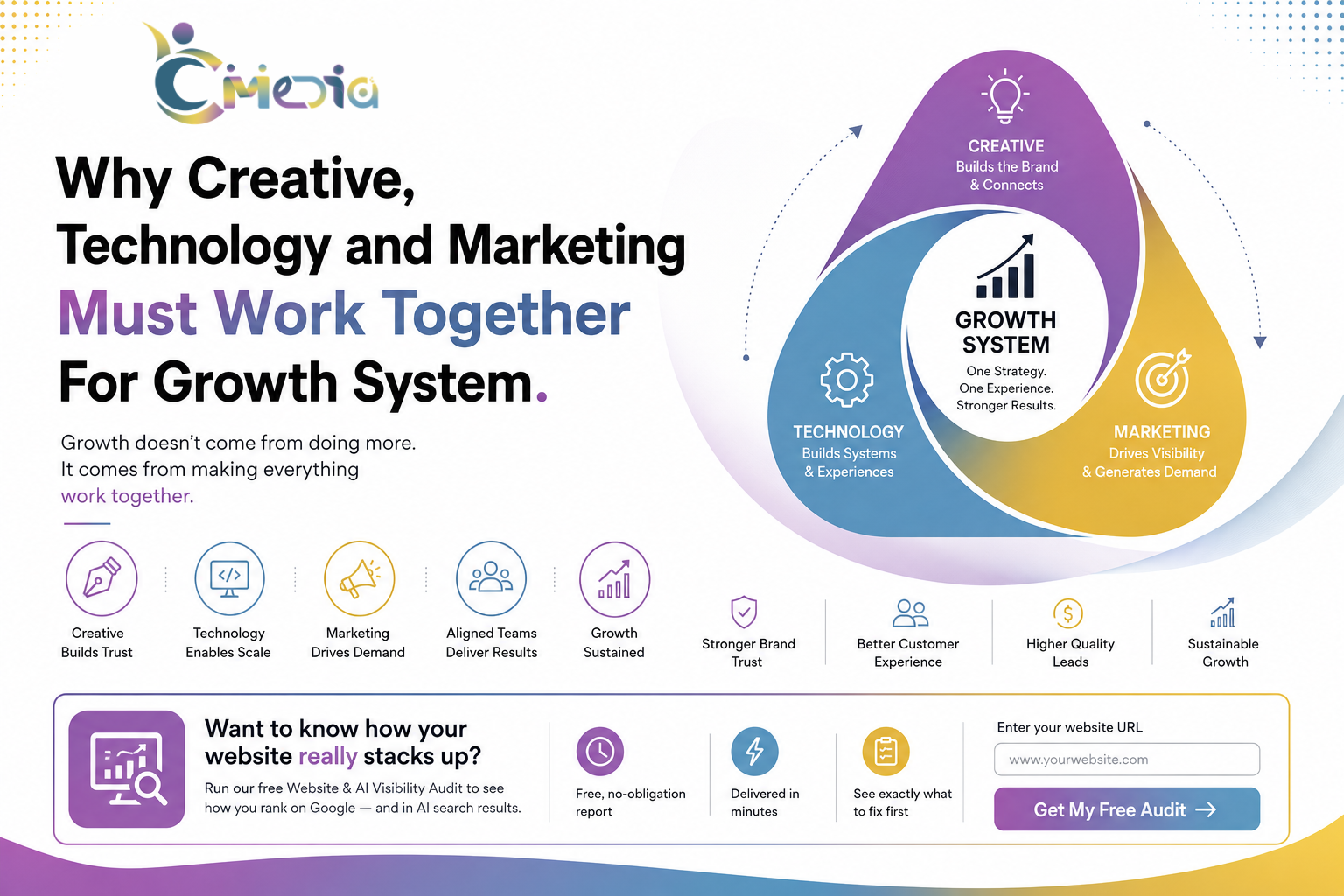
B2BWhy Creative, Technology and Marketing Must Work Together For Growth System
Businesses often treat branding, websites, SEO and advertising as separate projects. Discover why integrating creative, technology and marketing creates sustainable business growth.
How to Turn Technical Specifications Into Searchable Commercial Content
Specification sheets hold the answers buyers search for. Learn how to turn technical data into readable, searchable commercial content that generates enquiries.
Corporality Media Team
16 August 2025
Why Brand Searches Matter More Than Ever for Established B2B Companies
Brand searches are one of the clearest signals of commercial intent for established B2B companies. Here is why they matter more than ever, and how to measure and grow them.
Corporality Media Team
21 June 2025
How to Build a Search Performance Dashboard for a Manufacturing Business
A search dashboard should tell a manufacturer whether the website is winning work. Here is how to build one around enquiries, buyer intent and commercial demand.
Corporality Media
8 July 2024
How Human Expertise Can Differentiate a Manufacturing Website From AI-Generated Competitors
As competitors flood the web with AI-generated content, human expertise became a manufacturer's clearest differentiator. Here is how to put it to work on your website.
Corporality Media Team
22 April 2024