The New Digital Research Journey for High-Consideration B2B Purchases
High-consideration B2B purchases now involve a long, distributed digital research journey. This guide helps industrial businesses map it and show up where it counts.
A high-consideration B2B purchase — a piece of capital equipment, a long-term supply agreement, a specialised industrial system — is one of the most demanding decisions a business makes. It carries real financial risk, involves several people, and unfolds over weeks or months. By 2024, the way buyers conducted this research had changed profoundly, and industrial businesses that still pictured a simple, linear path were planning for a journey that no longer existed.
This article maps the new digital research journey for high-consideration purchases and draws out what it meant for industrial businesses trying to be present, credible and ultimately chosen. The picture is more complex than it once was, but the complexity is navigable for businesses willing to understand it.
The journey became long, non-linear and mostly invisible
The defining feature of the modern research journey is that most of it happens before a supplier is ever contacted. Buyers educate themselves, form opinions, build shortlists and eliminate options largely through independent digital research. By the time an enquiry lands, the field has often already been narrowed, and the supplier had no direct sight of how that narrowing occurred.
The journey is also non-linear. Buyers loop back, revisit questions, bring in new stakeholders, and change direction as they learn. A single decision might involve dozens of separate research moments spread across weeks. For industrial businesses, this meant influence had to be earned across many touchpoints, not captured at a single one.
Demand shifted shape at each stage
What a buyer searched for early in the journey differed sharply from what they searched for near the decision. Early research tended to be about understanding the problem and the options; later research turned to specifics — comparisons, credentials, terms and reassurance. A business that provided only one kind of content served only one stage.
Recognising how search demand changes between procurement, research and purchase allowed industrial businesses to meet buyers at each stage with the right material. Educational content supported early exploration; detailed, evidence-rich content supported the serious comparison that came later. Covering the whole arc kept a business present as the buyer's needs evolved.
Multiple stakeholders, multiple questions
High-consideration purchases are made by groups, not individuals. An engineer, a maintenance lead, a procurement manager and a senior decision-maker each bring different priorities and different questions, and each conducts their own research. Content that spoke to only one of them left the others to find their answers elsewhere, often from a competitor.
Learning to create content for multiple stakeholders in a B2B buying committee was therefore essential. The technical depth an engineer needed, the serviceability detail a maintenance lead wanted, and the commercial clarity procurement required all had to exist, because any unmet need could stall the decision. Serving the whole committee was not optional; it was how deals moved forward.
Evidence carried the decision
Because the stakes were high and the buyers cautious, evidence did the heavy lifting. Claims unsupported by proof were discounted, while data, test results, real applications and honest guidance on limitations built the confidence a significant purchase required. In a period where AI-generated content had made generic assertions cheap and abundant, genuine evidence stood out all the more.
The way an industrial business could build evidence into commercial content for AI-era search was central to winning high-consideration decisions. Evidence reassured human buyers and gave AI-driven research tools a credible source to draw upon. It was, in effect, the currency of trust in a journey built on managing risk.
Brand reduced perceived risk
In a high-consideration purchase, the buyer is not only choosing a product; they are choosing a partner they will depend on. Brand strength directly reduced the perceived risk of that choice. A recognised, respected name reassured a buyer that they were making a defensible decision — one they could justify to colleagues and stand behind if questioned.
The reasons brand searches matter more than ever for established B2B companies were especially pronounced here. A buyer who reached the end of their research by searching for a business by name signalled that the brand had earned a place in the final consideration. In risk-laden decisions, that reassurance often tipped the balance.
The trigger stage: recognising a problem
Every high-consideration journey begins with a trigger — an ageing asset, a capacity constraint, a compliance requirement, or a failure that forces a rethink. At this stage the buyer is not yet looking for a supplier; they are trying to understand the problem and whether it warrants action. Content that helped a buyer frame and diagnose their situation quietly positioned a business as knowledgeable long before any product was discussed.
Industrial businesses often overlooked this stage, assuming that buyers only mattered once they were ready to purchase. But the supplier who helped a buyer understand their problem earned credibility that carried through the rest of the journey. Being genuinely useful at the trigger stage was an investment in trust that paid off later, when the same buyer began evaluating options and remembered who had helped them think clearly at the outset.
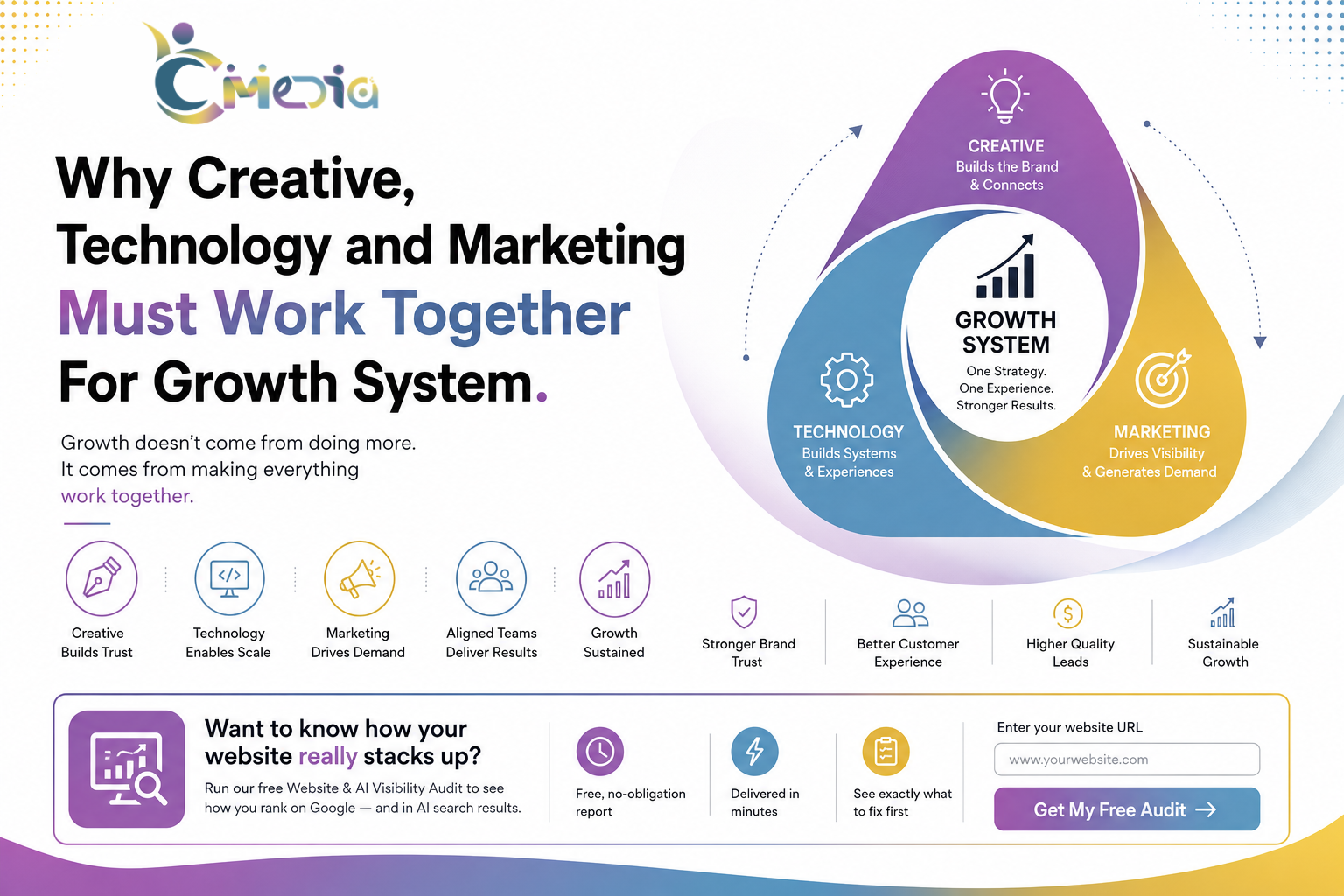
Want to know how your website really stacks up?
Run our free Website & AI Visibility Audit to see how you rank on Google — and in AI search results.
- Free, no-obligation report
- Delivered in minutes
- See exactly what to fix first
The evaluation stage: comparing options seriously
Once a buyer commits to acting, the journey enters its most demanding phase: serious evaluation. Here buyers compare approaches, scrutinise specifications, weigh trade-offs and test claims. This is where evidence, technical depth and honesty about limitations matter most, and where shallow content is quickly seen through. Buyers at this stage are actively looking for reasons to include or exclude each candidate.
Industrial businesses that provided genuinely useful comparison material — not self-serving spin, but honest, detailed information that helped a buyer make a sound decision — fared better than those who offered only marketing. Counter-intuitively, being candid about what a product was not suited for often built more trust than overclaiming, because cautious buyers recognised and respected honesty. The evaluation stage rewarded substance, and it punished the appearance of substance without the reality.
The validation stage: reducing the final risk
Near the decision, the buyer shifts from evaluating options to validating a preferred choice and reassuring themselves and their colleagues. They look for proof that the supplier can deliver, references that confirm reliability, and clarity on terms, support and what happens after the sale. This is where perceived risk is either resolved or reawakened, and where a strong reputation does much of its work.
Content that addressed the whole lifecycle of a product and relationship — installation, support, maintenance and long-term partnership — met the buyer's validation needs directly. So did clear, confident information about the business itself. An industrial business that made the final decision feel safe, well-supported and defensible removed the last obstacles to commitment, while one that left these questions unanswered risked a promising deal stalling at the finish.
Measurement had to match the journey
A long, distributed, mostly invisible journey defied simple measurement. The final enquiry told only the last chapter, and crediting it alone badly misrepresented the many touchpoints that had shaped the outcome. Industrial businesses that judged their marketing solely by last-click attribution consistently undervalued the earlier content that had done the real work of building understanding and trust.
A more honest approach accepted distributed influence and looked for patterns — branded search growth, enquiry quality, and the health of the content that served each stage. This was less tidy than a single metric but far more faithful to how high-consideration purchases were actually made. Measuring the journey honestly prevented businesses from cutting the very content that fed their pipeline.
A practical response for industrial businesses
The response was to treat the whole journey as the unit of planning rather than the final enquiry. That meant mapping the real stages the business's buyers moved through, understanding the different stakeholders involved, and ensuring credible, evidence-rich content existed for each stage and each role. It meant investing in the brand that reduced perceived risk, and measuring success across the journey rather than at its final step. An evidence-led approach to SEO, GEO and AIO gave industrial businesses a framework for doing this coherently.
Why patience beat pressure
A final characteristic of the new research journey deserves emphasis: it rewarded patience over pressure. Because buyers now conducted so much research independently, aggressive sales tactics aimed at rushing a decision tended to backfire. A buyer who felt pushed before they were ready often retreated to further research or turned to a supplier who respected their process. The businesses that won high-consideration purchases were usually those that supported the buyer's own timeline rather than fighting it.
This did not mean passivity. It meant being consistently present and genuinely helpful across the long journey, so that when the buyer was ready to decide, the business had already earned a place in their thinking. The supplier who had answered questions patiently at every stage, without demanding a premature commitment, was frequently the one the buyer trusted most at the moment of decision. In a journey defined by managing risk, being a calm, credible presence throughout was itself a powerful advantage, and it distinguished the businesses that understood the new reality from those still applying the tactics of an earlier era.
Taken together, these stages describe a journey that is longer and more demanding than the one most industrial marketing was originally built for, but also one that offers more opportunities to earn trust. A business that shows genuine expertise at the trigger, honesty at the evaluation, and reassurance at the validation stage builds a relationship that a single well-timed advertisement never could. The reward for understanding this journey is not just more enquiries but better ones, from buyers who arrive already confident that they are talking to the right supplier.
Conclusion
The digital research journey for high-consideration B2B purchases had become long, non-linear, multi-stakeholder and largely invisible to suppliers. For industrial businesses, success meant showing up credibly at each stage, serving every member of the buying group, leading with evidence, and building a brand that reduced the risk buyers felt. Those that mapped the journey and planned for its whole length were far better placed than those still waiting at the finish line for enquiries that had already been decided elsewhere.
Frequently Asked Questions
<p>Because most high-consideration research happens before a supplier is contacted. Buyers educate themselves, build shortlists and eliminate options through independent digital research, so by the time an enquiry arrives the field is often already narrowed, with the supplier unable to see how that narrowing occurred.</p>
<p>By ensuring content exists for each role: technical depth for engineers, serviceability detail for maintenance leads, and clear commercial information for procurement. Because any member of the group can stall a decision, an unmet need for any of them sends that person to find answers elsewhere, often from a competitor.</p>
<p>Because the final enquiry reflects only the last of many touchpoints spread over weeks or months. Crediting it alone undervalues the earlier content that built understanding and trust. A more honest approach accepts distributed influence and looks for patterns like branded search growth and enquiry quality.</p>
Related Content You Might Like
How Human Expertise Can Differentiate a Manufacturing Website From AI-Generated Competitors
As competitors flood the web with AI-generated content, human expertise became a manufacturer's clearest differentiator. Here is how to put it to work on your website.
Corporality Media Team
22 April 2024
Why Generic AI-Written Content Was a Weak Strategy for Industrial Businesses
Generic AI-written content looked efficient but rarely worked for industrial businesses. This guide explains why it fell short and what a stronger approach looked like.
Corporality Media Team
15 April 2024
How AI Changed the Expectations for Business Content Quality in 2024
AI made average content cheap and abundant, raising the bar for what counted as quality. Here is what B2B businesses needed to understand about the new standard.
Corporality Media Team
11 March 2024
Why Industry Specialisation Can Improve Digital Marketing Performance
Industry specialisation is not a limit on B2B digital marketing — it is one of the most reliable ways to improve message clarity, search demand and lead quality.
Corporality Media Team
2 May 2020
 B2B
B2BWhy Creative, Technology and Marketing Must Work Together For Growth System
Businesses often treat branding, websites, SEO and advertising as separate projects. Discover why integrating creative, technology and marketing creates sustainable business growth.
SEO Agency vs Internal SEO Team: Which Model Works for Established Businesses?
Agency, in-house team, or a blend of both? For an established business, the right SEO operating model depends on how much specialist work you need, how deep your product knowledge sits internally, and how you want accountability structured. This guide weighs the trade-offs honestly.
Corporality Media Team
22 April 2026